UK Black History Month is an important time for us to recognise and celebrate the resilience, strength, and unwavering commitment to progress that defines the Black community globally. This year, AMS have signed the Halo Code, committing to protect colleagues who wear their natural hair and protective styles with pride. In our blog below, Global DEI, Tech & Innovation Senior Manager (and Black Employee Network member) Charlotte Allen shares her perspectives on why it matters.
93% of Black people in the UK have experienced microaggressions related to their Afro hair, with 49% of those people experiencing this discrimination in the workplace, according to research by Pantene, Black Minds Matter and Project Embrace.
Just over half reported that this hair discrimination has negatively impacted their self-esteem or mental health.
On a personal level, I first experienced hair discrimination at the age of 6 at the hairdressers, where I was told I will look so pretty in a few years when I can straighten my hair – therefore reinforcing the belief that straight hair is pretty and curly hair therefore is not.
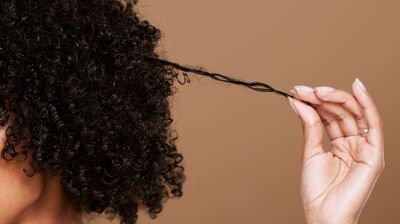
I had many other experiences of hair discrimination, people just touching my hair without asking, called out for trying to be ‘white’ with straight hair, called out for trying to be Jamaican with curly hair etc., until a particular comment that inferred my straight hair was better than natural hair at a DEIB event made me stop and think, encouraging me to shift back to my natural hair and be proud of what grows naturally out of my head.
Unfortunately, I am not alone in my experiences and having spoken to some of my AMS colleagues, these microaggressions and negative comments about hair resonate; and what shines through is the belief that by not fitting into ‘white’ stereotypes, Black people – and particularly women are less likely to be successful at work, in interviews and for promotion opportunities.
In fact, a Dove survey in 2023 found that 20% of Black women have been sent home from work because of their hair, 25% of Black women believe they have been denied a job opportunity because of their hair, and Black hair is 2.5 times more likely to be seen as ‘unprofessional’.
Whilst the UK has a certain level of legal protection with published guidance by the EHRC stating that restrictive policies that disproportionately impact Black people may amount to unlawful indirect discrimination under the Equality Act 2010, the US Crown Act of 2023, supported by Dove has not passed into law, although it is worth noting that over half of the US states have localised hair discrimination laws.
But why is this important? For companies wanting to promote an inclusive culture and have a fair and unbiased recruitment process, considering the recruitment of Black people will be high up the list.
As we know, ethnic minorities are more likely to be unemployed because employers reject applications from ‘non-white’ names (Zywsen et al, 2020 study), and Black students are twice as likely to be rejected for top jobs.
Laura Durrant, CEO of the Black Talent Charter, said: “Our research suggests that the adage is true; Black talent works twice as hard to get half as far. There’s strong representation at universities, studying the right courses, engaging with career opportunities, and applying in high numbers compared to peers, and yet we are still seeing Black graduates falling away through the process.”
And this does not just impact graduates – Black executives make up only 1.2% of leadership positions in FTSE 100 companies, despite representing 3.9% of the population (The Parker Review, 2025).
Black executives make up only 1.2% of leadership positions in FTSE 100 companies, despite representing 3.9% of the population .
The Parker Review (2025)
Laura goes on to say that employers must take a renewed look at the barriers to recruitment to fundamentally change this. And in my opinion, one of those things is hair discrimination. By educating colleagues on hair discrimination and opening the dialogue around bias within the workplace, this is a step in the right direction to reduce this gap for Black applicants and employees.
And so, it is so exciting that AMS are committing to this by signing up to the Halo Code this Black History Month. The Halo Code, created by the Halo Collective, is a short, practical commitment employers can adopt to ensure no employee is penalised for natural hair or protective styles (e.g., afros, braids, twists, locs). It operationalises Equality Act principles into clear workplace expectations and culture signals.
It is the UK’s first Black Hair code.
The Halo Code explicitly protects employees who come to work with natural hair and protective hairstyles associated with their racial, ethnic, and cultural identities.
By adopting the Halo Code, AMS is proactively taking a stand to ensure that no colleagues – current or future – will face barriers or judgments because of their Afro-textured hair, and that is a great step to supporting our Black colleagues feel that continued sense of belonging, and the ability to bring their authentic self to work.
AMS’s Black Employee Network (BEN) grew by 51% in the UK&I this year, and 29% globally. Initiatives like our EmBue development programme in the UK&I continue to empower future ethnically diverse leaders and promote belonging for all across our global business.
Read more about our progress and the work that lies ahead in our latest Annual DEIB Impact Report.