
Authored by: Christian Padaca, Ewelina Wieczorek, Shrikrishna Akkalkar and Katrina Miranda.
As organizations expand across geographies, one truth becomes impossible to ignore: performance cannot be managed effectively in isolation from the culture in which it lives.
What if the biggest barrier to performance isn’t capability, process, or strategy – but cultural blind spots leaders don’t even realize they have? Processes and frameworks matter, but it is people, context, and lived experience that truly shape performance outcomes. India is a powerful example of this reality. It is a nation known for its deep cultural heritage, strong academic foundations and one of the world’s most dynamic technology and services ecosystems. It is a place where regard for others, hierarchy, and relationship‑building are deeply embedded in daily interactions – where communication can be nuanced, and where festivals and traditions shape the rhythm of work and life.
To lead India teams effectively, cultural intelligence is not a “nice to have”, it is the differentiator that turns global expectations into real and consistent performance.
Performance management in India is complex and multi-faceted shaped by deep-rooted cultural norms, hierarchical structures, and evolving workplace expectations. As global organizations increasingly rely on Indian talent and operations, understanding these cultural nuances is essential for driving results, building trust, and sustaining engagement. This article draws upon insight from organizational research, industry best practices, and real-world scenarios to provide actionable guidance for leaders and HR professionals managing performance in India.
At AMS, our experience operating at scale across India has reinforced a consistent pattern: performance accelerates when leaders interpret behaviors through a culturally intelligent lens. Across a workforce of 1,400+ colleagues in multiple Indian locations supporting both local and global clients, we have seen that performance challenges are rarely rooted in capability. More often, they stem from misalignment between global expectations and local ways of working – how feedback is interpreted, how decisions are escalated, and how accountability is expressed in practice.
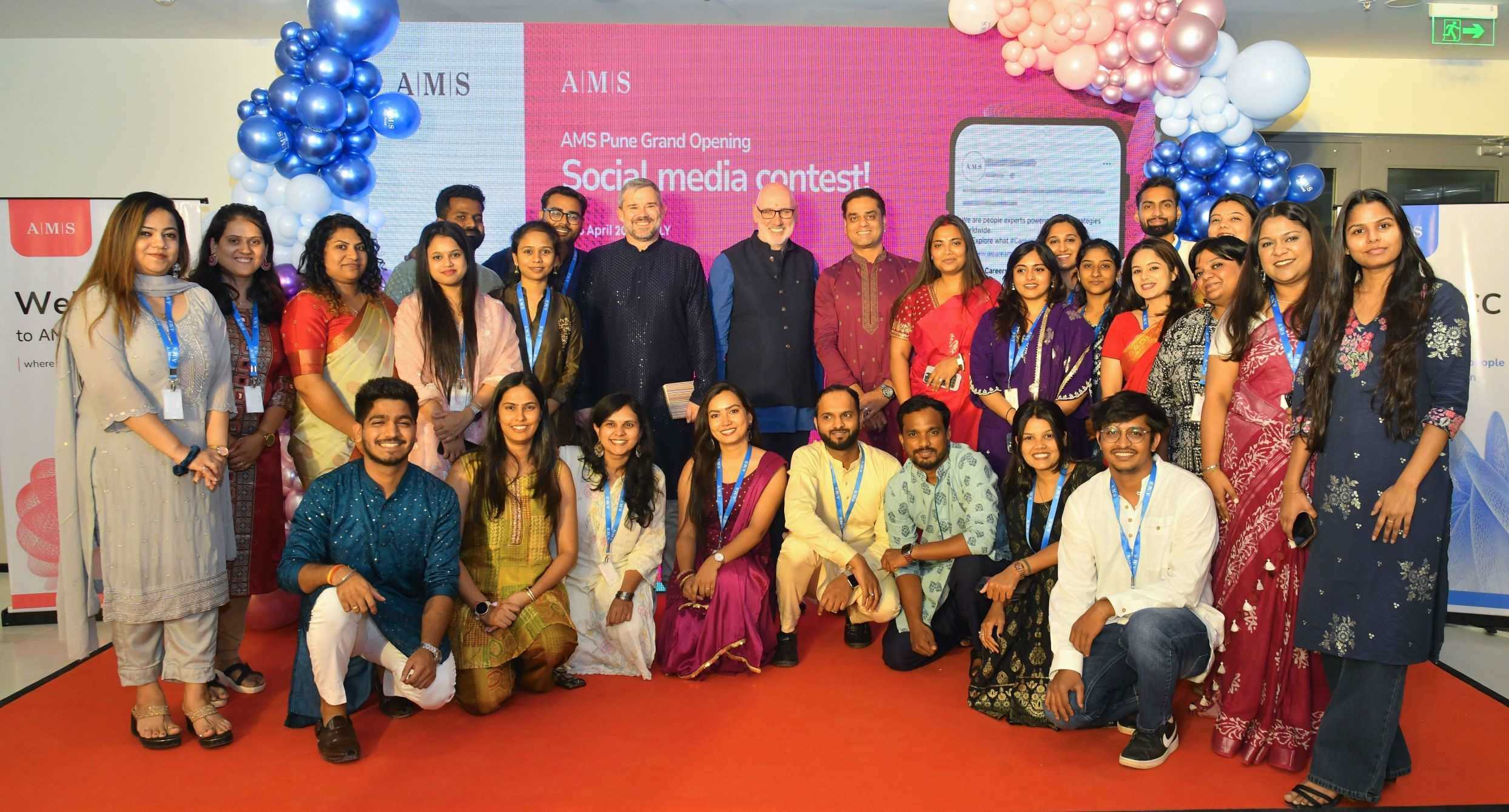
When expectations are framed in ways that resonate culturally, teams align faster, communicate more openly, and deliver with greater consistency. In India, culturally attuned leadership is not a “soft” capability – it is a performance accelerator.
If you’ve ever wondered why performance management feels different in India – or how to lead India teams with both confidence and cultural sensitivity – this piece offers clear, grounded, and people‑centred practical tips.
In this article, you will discover:
- How cultural dynamics shape the way India teams interpret expectations, feedback and accountability,
- Clear view of strengths and friction points these cultural nuances create within global operating models,
- And the practical leadership approaches that help global managers navigate hierarchy, communication, and workstyle differences to drive clarity, trust and high performance.
Understanding Hierarchy and Cultural Norms in Indian Workplaces
Hierarchy in India is deeply embedded owing to socio-cultural systems shaped by centuries of evolution. Within global operating framework & cultures, hierarchy is often role specific and not about seniority.
On the contrary, the India working cultures are still largely influenced by seniority, levels and positions, manifested in the use of “Sir” or “Maam” or sometimes in behaviours which are soft, compliant and sometimes conforming – is in fact a social mechanism that signals professionalism, trust and courtesy. These behaviours help preserve equilibrium in environments where relationships, reputation, and collective harmony matter as much as technical skill and should not be perceived as weakness.
While modern Indian companies are increasingly global, digital, and meritocratic, the cultural logic that elevates seniority, experience, and positional authority continues to influence how teams interpret direction, communicate concerns, and align around decisions.
India’s hierarchical culture creates advantages global leaders may tend not to relate to. Respectful, measured communication minimizes conflict and keeps teams aligned even in ambiguity. And alignment when a decision is made, is easier. The result is dialogue that’s more deliberate, less reactive, and often more thoughtful than what low‑context environments produce.
But the very qualities that create stability can just as easily become friction. Deference can silence challenge, leaving critical risks unspoken. Politeness can blur the edges of feedback, making true performance harder to diagnose. And when teams instinctively wait for senior approval, momentum slows and ownership dissipates – especially among emerging talent who hesitate to step forward. What looks like harmony can, without intentional leadership, become a quiet drag on speed, innovation, and accountability.
India teams are not resistant – they are culturally calibrated. Unlocking their full potential requires leaders who respect this calibration while creating the psychological safety for candour, autonomy, and upward challenge.
Recognizing this duality is only the starting point. The real shift happens when leaders turn cultural intelligence into everyday behaviours. The next section outlines practical techniques to create conditions where candour and ownership can thrive – without disrupting the cultural fabric that enables trust and cohesion.
Practical Performance Management Pointers
- Invite challenge openly and engage in constructive discussion. Ask for risks, alternatives, and concerns to shift the conversation from polite agreement to genuine dialogue.
- Confirm alignment explicitly. Replace “Any questions?” with a quick walkthrough of next steps to build commitment.
- Read indirect signals. Recognize that silence, softening language, or repeated clarifications could be sign of disagreement – not consensus.
- Use 1:1 settings to have open discussions. High‑context cultures often reserve candor for private spaces; create them intentionally.
- Make early escalation safe. Frame “tell me early” as responsible leadership to build psychological safety and prevent slow‑burn issues.
Holidays and Festivals as a Capacity Variable
Being a hugely diverse country, holidays and cultural observances play an important role in India which is important for any global organisations and leaders to be familiar with. India’s calendar is woven with national and regional festivals – Diwali, Holi, Eid, Navratri, Pongal, Onam and many more – that are celebrated by large cross-section of employees. During these periods, teams often take extended leave and schedules shift quickly, creating predictable fluctuations that leaders must build into their operating models and efficient planning.
Festival breaks act as natural resets, restoring energy, strengthening relationships, and deepening the sense of community that fuels cohesion and collaboration. Teams often return with higher morale, sharper creativity, and renewed adaptability – advantages that can materially elevate performance when harnessed intentionally.
Absence of adequate planning during these pre-planned festivals can generate capacity gaps, volatility in turnaround times, and strain on SLAs – particularly in high-volume environments. It is important that these festivals as not seen as exceptions but part of the talent life-cycle which can avoid situations leading to scrambling: reallocating work, negotiating temporary SLA shifts, or relying on overtime to maintain continuity.
The next section outlines practical actions leaders can take to operationalize cultural awareness – protecting performance while sustaining engagement and wellbeing.
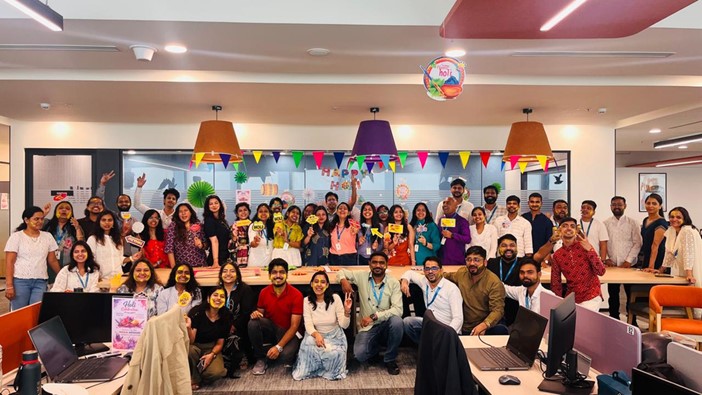
(Photo: AMS Pune GCC during Celebrating festival of Colors of India. A celebration of culture, connection and moments that bring our teams together as a community.)
Practical Performance Management Pointers
- Treat festivals as reality, not surprises. Keep a live, shared holiday calendar covering national and regional events so capacity shifts are anticipated, not discovered late.
- Build buffers around major festivals. Move critical deadlines and high‑risk deliverables away from key holidays, and regional New Year periods to protect SLAs and stability.
- Forecast with festival‑driven scenarios. Model best/expected/worst‑case capacity ahead of major celebrations and adjust workload expectations accordingly.
- Communicate impacts early. Issue a concise “festival impact brief” to stakeholders outlining availability, risks, and mitigations before capacity tightens.
- Secure cross‑regional support proactively. Arrange coverage from other hubs to maintain continuity during high‑festival weeks.
The Multitasking Myth and the Long-Hours Illusion
In many Indian workplaces, long hours and nonstop multitasking operate as a proof of commitment – signals of reliability, dedication, and loyalty. This is a deliberate outcome, driven by cultural values that emphasize responsiveness, collaboration, and availability to support others as needed. In high-context environments where relationships and reputation carry weight, the person who consistently “shows up” – even late into the evening – earns social capital. But this always-on rhythm, while well‑intentioned, carries strategic consequences leaders often underestimate.
At its best, this rhythm fuels an exceptional work ethic. Teams show extraordinary ownership, quick verbal alignment, and an instinct to collaborate – often solving problems faster through informal exchange than any formal process could. The drive to “pull together” propels teams to go above and beyond, anchored by a strong sense of shared responsibility. And as India’s workplace evolves – with flexible schedules, hybrid models, and wellbeing initiatives gaining traction – the shift toward healthier balance is accelerating without diluting ambition.
Yet the shadow side of this norm is equally real. When long hours become the currency of commitment, multitasking starts to look like effectiveness even as it erodes it. Cognitive switching drains focus, deep work disappears, and quality declines despite increasing effort. As a result, burnout transitions from being an anomaly to an expectation. And the instinct to always be available drives a quiet competition over who stays online longest—blurring boundaries between dedication and overextension.
If leaders want to break this cycle of effort masked as performance, they must replace cultural default behaviours with intentional leadership routines. The shift from activity-signal to impact‑signal doesn’t happen through slogans or reminders — it happens through daily habits that create clarity, protect focus, and make healthy boundaries both visible and safe. The following practices translate that shift into concrete actions managers can apply immediately.
Practical Performance Management Pointers
- Re‑anchor performance around outcomes, not stretch hours. Reward impact – not online presence – to break the cultural signal that long days equal dedication.
- Set ruthless clarity on priorities. Define what matters now, for whom, and by when, using simple SLA‑based categories to stop reactive overwork.
- Use prioritization frameworks to deliver core work. Tools like SLA tiers or “must/should/can‑wait” reduce cognitive switching and keep teams focused.
- Normalize weekly workload planning. A short ritual distinguishing urgent, strategic, and deferrable work prevents the silent creep of extended hours and promotes employee welfare.
- Model healthy boundaries. Demonstrate that excellence doesn’t require being always‑on— delay‑send emails, honor focus time, and make wellbeing visible.
Cultural Intelligence as a Competitive Advantage
If culture isn’t part of your performance playbook in India, you will pay for it – in speed, cost, talent, and trust. Operational discipline without cultural intelligence breeds false signals and slows motion: targets look aligned on paper, but decisions stall, feedback is softened, and accountability diffuses. Leaders who combine professional rigor with cultural fluency unlock a level of alignment, transparency, and engagement that cannot be achieved through process alone. Respect for hierarchy, empathy in communication, and the ability to contextualize global expectations for local realities are not “nice to have” – they are essential to driving outcomes at scale.
Leaders who treat culture as “context” rather than a core variable misdiagnose the problem – and then double down on process, creating more problems.
Performance excellence in India is not the result of lowering standards; it is the outcome of setting clear expectations in a way that resonates culturally and empowers teams to meet them. When global expectations are expressed in culturally fluent terms, alignment accelerates, transparency strengthens, and delivery becomes predictable.
The leadership mandate is clear: cultural intelligence is not a soft leadership trait – it is a strategic performance accelerator. Organizations that cultivate it build trust faster, unlock deeper discretionary effort and scale with greater resilience and cohesion. The choice is simple: translate to elevate – use culture as your compass, not your constraint.
This article marks the start of a broader exploration. In the next instalment of this series, we will examine how performance management comes to life across other key locations – including the Philippines, Poland, Mexico, and the United States – giving leaders a deeper, more nuanced understanding of what truly drives global performance excellence.
References:
- Performance Management Systems in India: Trends, Challenges, and Future Directions [ijfmr.com]
- Work Culture in India: What Global Employers Need to Know [wisemonk.io]
- Performance management in India – PwC [pwc.in]
- Building High-Performance Teams in India: Best Practices for Leaders [exed.asia]
- Festivals & Corporate Success: Unlocking Joy, Productivity, and Mental Clarity [linkedin.com]
- Key Assertiveness Skills (With Tips) [in.indeed.com]
- Work-Life Balance in India-Based Companies [ascent-hr.com]