
Every December my feed fills up with predictions.
Most of them sound broadly the same. Another AI wave. Another platform promising reinvention. Another confident statement that “this will change everything”.
I don’t dismiss any of it. AI will change Talent Acquisition in deep ways.
But the part I care about isn’t the technology itself. It’s the outcomes it enables when real teams, with real constraints, actually know how to use it.
Most of the noise is still about tools and features. Very little of it talks about the structural shifts those tools unlock: the changes in operating models, in decision logic, in how talent work flows, in how we measure success, and in how people inside TA build their careers.
That’s the space I’m interested in.
The space where technology becomes the quiet catalyst, not the hero. Anyone who knows me knows I love innovation. I enjoy new ideas and new tools. But my job, and the bit I enjoy most, is making sense of them so other people can use them on a Monday morning.
On the surface, what’s happening right now looks like a product revolution: new logos, new point solutions, new AI features every week. Underneath, something more fundamental is already under way.
Next gen RPO models are being built quietly around continuous orchestration, vacancy risk, skills evidence and multi-disciplinary teams. AMS One is emerging as an orchestration layer across that landscape, not as another system of record, but as the place where all of this actually comes together.
This paper is my attempt to capture the patterns I see forming. They’re not theoretical. They’re already visible in live programmes and client work. They feel inevitable because, in small ways, they’re already happening.
The Requisition Is Losing Its Authority
For most of my career, the requisition has been the organising principle of Talent Acquisition.
The req decided when work started and when it stopped. Processes, systems and governance all lined up behind it. In RPO, success was often defined as “how efficiently we move reqs from open to filled”.
The problem is that organisations no longer move at the pace of the requisition cycle.
Work emerges before anyone raises a req and continues long after one closes. Critical gaps appear in plants, labs, sites and functions whether the form has been submitted or not. Talent doesn’t care where your workflow officially begins.
What I’m seeing now is more teams behaving in a way that matches this reality.
They engage communities long before a specific vacancy. They build insight continuously. They’re doing the jobs-to-be-done of TA, not just the jobs triggered by a form. And in next gen RPO, they’re treating the requisition as a signal, not the centre of the universe.
The unit of work is starting to shift from requisitions to talent work packets.
A talent work packet might be:
- map the market for a new niche profile in a specific location
- build and warm a micro talent pool for a critical site
- reset an intake process with a manager who keeps losing candidates
- run a targeted nurture flow for a critical persona
- deliver a shortlist for a high-risk leadership role
- coach a manager on interview practice and offer narrative

These packets move through a shared orchestration layer rather than a simple linear process. Some are people-led. Some are content-led. Some are automation-led. Some are best solved by internal mobility or reskilling, not external hiring.
AI enables this by sensing signals earlier, spotting patterns and keeping work moving when humans aren’t directly on it. But the real shift is not “because of AI”. It’s because a req-only model is no longer fit for how work and risk show up in real organisations.
In the next gen RPO models I’m closest to, this is already baked in. AMS One is used as the place where these talent work packets are created, routed and tracked, across recruiter, sourcer, attraction, brand, insights and operations.
Over the next few years, I expect the requisition to shrink back to what it really is: a trigger and a compliance artefact. The true unit of work will be these packets, flowing across one orchestrated team.
Vacancy Risk Becomes the Honest Metric
I’ve never been fully satisfied with time to fill.
It’s better than nothing, but it hides the real issue: the cost of work left undone.
A missing engineer on a line. A lab without a critical specialist. A site with no operations lead. A product team without a manager. The real impact isn’t “43 days” – it’s the empty chair and everything that doesn’t happen because of it.
I think the most advanced TA and RPO teams in 2026 will feel less like a requisition queue and more like a vacancy risk desk.
Their primary question won’t be “how fast did we fill it?” but “how much vacancy risk did we prevent?” and “what was the cost per empty chair day we avoided in this part of the business?”
AI and orchestration are quietly changing what’s possible here.
With the right data and a platform like AMS One sitting across the stack, you can see risk building before it becomes a crisis. You can model:
- which roles carry the highest cost per empty chair day
- where demand is likely to spike based on business signals
- which locations are entering a risk zone on leadership or specialist skills
- what mix of build, buy, borrow and automate might best cover the work
Total Talent thinking becomes practical rather than conceptual. You can actually test scenarios:
- What if we develop internally instead of hiring?
- What if we flex contingent or project-based talent here?
- What if we automate part of this process and change the profile of the role?
None of this replaces human judgement. It just gives it a sharper field of vision.
I can easily imagine a monthly review where the first slide is “Top ten roles by vacancy risk and cost per empty chair day”, not “Top ten ageing requisitions”. The conversation with the business shifts from “how fast can you fill this?” to “what’s the right way to cover this work at acceptable risk?”
That’s why I believe vacancy risk will become a defining measure in 2026. Not because a vendor says so, but because the business will increasingly demand it.
Skills Become Evidence, Not Labels
The skills conversation has been around for years. Most organisations have updated job descriptions and frameworks. Many have invested in skills taxonomies.
And yet, hiring decisions often still default to proxies: job titles, past employers, degrees, and “years of experience”.
The shift I’m seeing, the one that actually changes decisions, treats skills as visible and evidenced, not just words on a CV or a profile.
Skills are inferred from real work, learning and behaviour, then tested and recognised. I tend to think of this as skills telemetry: instead of static labels, you see signals from projects delivered, code shipped, designs produced, problems solved, learning completed, communities joined and feedback received.
The aim is not surveillance. The aim is a more honest view of what people can do right now, not just what they once did.
Sitting alongside that is a skills evidence chain:
- skills inferred through data and models
- skills validated through assessment, portfolios or track record
- skills recognised in contracts, pay, progression and mobility
AI is useful here because it can surface patterns we’d otherwise miss, especially for non-traditional talent, career switchers and people without neat, linear CVs. But again, this is not an algorithm deciding someone’s future. It’s human judgement, strengthened by better evidence.
In the RPO and advisory work I’m closest to, this is already influencing real hiring decisions. It’s more practical than theoretical. TA is beginning to own more of that skills evidence chain because it lives inside every hiring and mobility conversation.
Over the next few years, I expect “skills-first” to move from branding language into the mechanics of how we do hiring:
- intake conversations grounded in evidence, not just wishlists
- shortlists built on proven capability, not only familiar backgrounds
- internal and external talent seen in one view when you’re deciding how to cover work
That’s when skills-based hiring stops being a slide and starts being a system.
Manager Behaviour Finally Enters the Data
Every recruiter knows this instinctively: hiring managers shape outcomes more than any system ever will.
They can accelerate decisions or stall them. They can give candidates confidence or confusion. They can make a process feel coherent or chaotic in a single conversation.
Research keeps reinforcing that manager behaviour is tightly linked to both experience and quality of hire. Dropout risk rises the moment a candidate senses disorganisation, delay or inconsistency.
Up to now, most of this has lived in anecdote and frustration. Technology and better orchestration means we can start to see it more clearly.
Simple signals tell you a lot:
- how long a manager takes to review profiles
- how quickly they provide interview feedback
- how often their offers are accepted or declined
- how candidates rate their experience when that manager is involved
- what churn and regretted leaver patterns look like in their team
It doesn’t need to be perfect. It just needs to be visible.
In next gen RPO programmes, I’m seeing this evolve into a practical Manager Maturity view inside platforms like AMS One. Not as a weapon, but as a design input.
High-maturity managers can be trusted with more flexibility and pace. They’re the ones you route scarce candidates and critical roles to. Managers who are still building that maturity get more structure: clearer intake, stronger storytelling support, more guided processes.
The point is not to “score” managers for the sake of it. It’s to admit the impact they have, and design the orchestration around that reality instead of pretending everyone behaves the same.
By 2026, I expect mature TA and RPO teams to routinely route work based on a mix of vacancy risk, skills complexity and manager maturity, because ignoring those variables is simply too expensive.
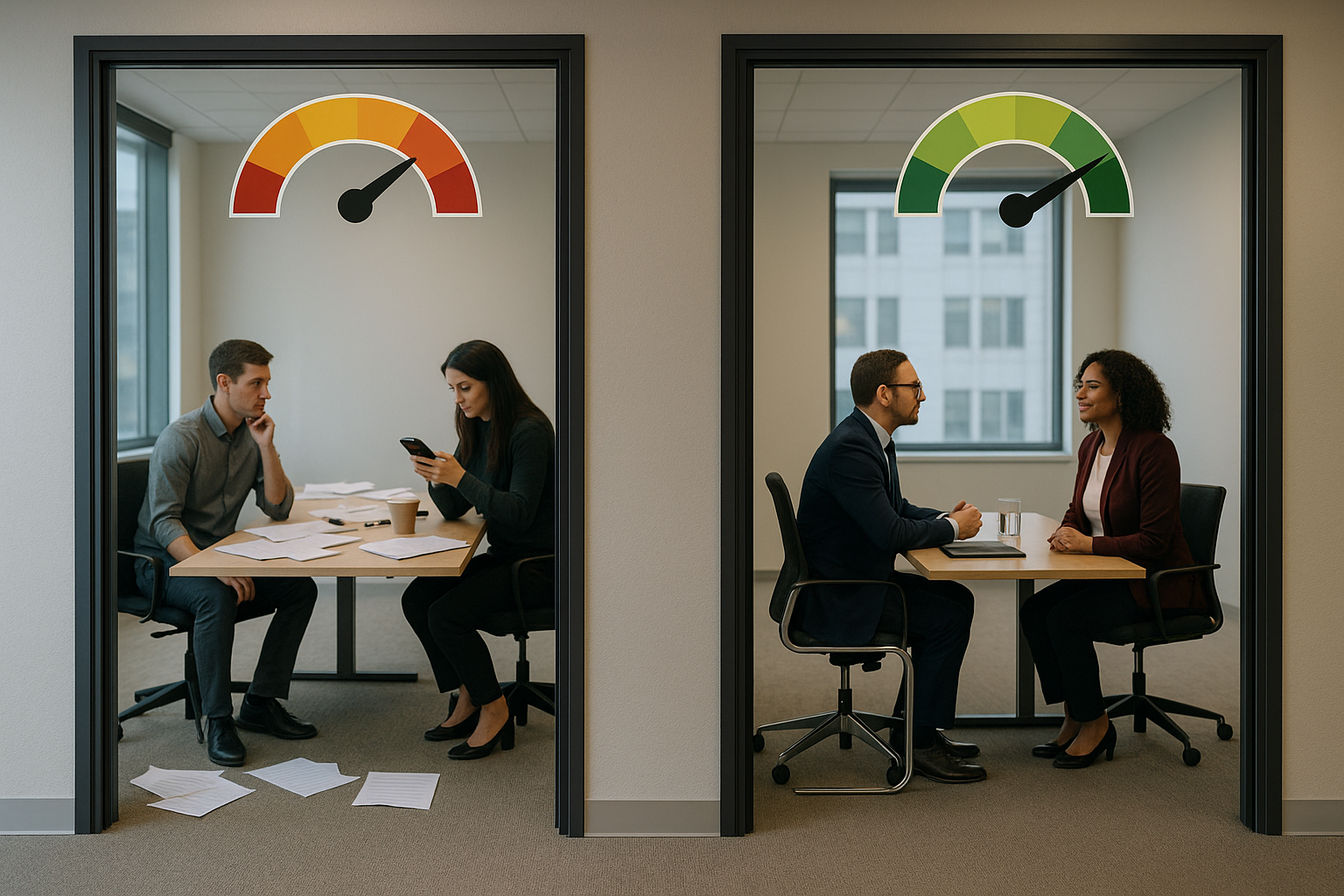
One Team, Many Crafts: How TA Is Growing Up
The modern TA function has grown well beyond its original brief.
It now touches brand, sourcing, analytics, advisory, operations, assessment, stakeholder engagement and technology. In RPO, you feel that even more: on a single programme you might have recruiters, sourcers, attraction specialists, employer brand advisors, insights and intelligence, operations and tech all working on the same business.
The reality is we don’t have “one TA job” anymore. We have multiple crafts inside one team.
Up to now, we’ve often treated those crafts as one blurred function. Next gen RPO is changing that by making the orchestration explicit.
The way I think about it is simple:
- some people are closest to supply and experience – they live in channels, content, conversations and communities
- some are closest to data and decision – they live in patterns, risk, flow and design
Both sides are essential. Neither works in isolation. And orchestration is what turns them into one coherent team rather than a loose collection of roles.
This is where AMS One comes in again.
In the programmes using it well, it gives everyone, recruiters, sourcers, attraction, brand, insights, operations a shared view of:
- which talent work packets exist right now
- where vacancy risk is building
- how different funnels and communities are performing
- where candidates and managers are feeling friction
It doesn’t create new silos. It does the opposite. It allows different crafts to play to their strengths off the same picture of reality.
For me, that’s what “TA growing up” really looks like. Not more hierarchy. Not more layers. Just a clearer acknowledgement that this is a multi-disciplinary team sport, and we should design it like one.
Shadow Tools Become the Thinking Layer of Next Gen RPO
If you watch how TA and RPO teams actually work day to day, you see something interesting.
Beneath the official tech stack: ATS, CRM, VMS, assessment platforms, there is a thin layer of small, unofficial tools everywhere.
Quick prompts pinned in browsers. Summary templates saved in shared folders. Interview guides rewritten in Word or Notion because the system version doesn’t quite land. Spreadsheets quietly doing logic the platform can’t. Personal AI assistants helping people think faster.
These aren’t bad habits. They’re clues.
They show you where the real thinking work is happening, where people interpret context, make trade-offs and decide what to do next.
Some call this BYOAI. I see it as the early version of a thinking layer for TA and RPO.
Next gen RPO doesn’t try to crush that layer or pretend everything happens in one system. It does something more honest: it designs for it.
In the programmes I’m closest to, that means creating a space where prompts, playbooks, rules and decision-support can sit across the stack, safely, visibly and with governance.
The big platforms stay as systems of record. They’re essential. They store what happened and keep you compliant. The thinking layer is different. It’s where you decide what should happen next.
That’s exactly the gap AMS One is designed to sit in.
Not another point solution demanding everyone live in yet another screen, but an orchestration layer that connects:
- data from different systems
- the talent work packets in flight
- the prompts, nudges and workflows teams actually use
It lets those “shadow tools” come into the light, be tested and refined, and then scaled where they work. It respects the fact that different people will always use different tools, but still gives you one place where the logic and reasoning can live.
My prediction is that by 2026, the most effective RPO models will be defined as much by this thinking layer as by their sourcing strategy.
The organisations that win won’t be the ones pretending everything happens inside the ATS. They’ll be the ones who gave the system of reasoning the same attention they gave the system of record, and built the orchestration to hold it all together.
Recruitment Starts to Behave More Like Media
Programmatic advertising is now table stakes.
Most TA and RPO teams know how to push jobs across networks, optimise spend and tidy up cost per click. Useful, but not differentiating.
Candidates aren’t sitting waiting for job ads. They are in communities and group chats. They’re listening to creators they trust. They’re comparing notes in WhatsApp long before they click “apply”. They care far more about conversations than campaigns.
The next shift is TA behaving less like an advertiser and more like a micro media and community network.
For the hardest-to-fill personas, I’m seeing leading teams move from one-off campaigns to simple programming and community plans.
That might mean:
- persistent communities: WhatsApp, Discord, Slack, LinkedIn groups, where people can sit on the edge, watch and listen before engaging
- regular touchpoints: short videos, live Q&As, small group calls with hiring managers or current employees
- local “beats” for key sites or plants, where recruiters and hiring managers show up consistently as recognisable hosts
- stories that feel honest, not polished: “what surprised me when I joined”, “what’s hard but worth it”, “how I really moved roles”
The unit of value stops being an impression on a job ad. It becomes the number and quality of real conversations with the right personas in the right communities.
In that world, a good week for an RPO media and attraction function isn’t “X thousand views”. It’s “Y real conversations in these communities, and Z people we’ve seen and spoken to more than once”.
Programmatic and targeting don’t disappear. They move into the background as plumbing: the pipes that help the right people find the right spaces, not megaphones to blast everyone at once.
AI supports this by showing which communities actually convert, which formats trigger replies, which topics get people talking rather than scrolling past. It takes friction out of clipping, repurposing and tagging content.
But it doesn’t replace showing up.
The teams that will pull away in 2026 will be the ones willing to behave like small, consistent media operations – with simple programming, owned spaces and real conversations, rather than teams that just “post jobs” and hope.
TA Careers Get Rewritten, Not Replaced
A lot of AI commentary jumps straight to one question:
“Will recruiters still exist?”
It’s the wrong question.
Recruiters will absolutely still exist. The more interesting shift is this: the idea of a single, generic “recruiter career” is running out of road, especially in next gen RPO.
As orchestration models mature, vacancy risk becomes visible, skills evidence improves and platforms like AMS One sit over the stack, the work inside TA stops looking like one big role and starts looking like a set of distinct careers that happen to live in the same team.
In the strongest programmes I see, four shapes are emerging:
- people who are closest to the work: embedded in plants, labs, sites and functions, operating more like talent partners and headhunters than requisition processors
- people who are closest to the system: treating the TA stack as a product, tuning flows, automations and journeys
- people who are closest to the story: attraction and brand specialists behaving more like creators and editors than campaign responders
- people who are closest to the risk: using data and insight to decide what to prioritise, where to route talent work packets and how to balance build, buy, borrow and automate
Right now, a lot of that still sits under one label: “recruiter”.
As next gen RPO and orchestration platforms mature, it becomes hard to pretend everyone is doing the same job. AMS One and similar tools make it visible:
- who is actually reducing vacancy risk
- who is building communities that convert
- who is improving system performance
- who is shifting quality and retention over time
Once you can see that, careers start to change.
The full-stack recruiter role doesn’t get “replaced by AI”. It gets pulled apart by clarity. People are nudged and sometimes pushed to decide what they want to be world-class at: markets and relationships, product and systems, media and narrative, or risk and insight.
For RPO providers, this has real implications:
- how you position your service (bodies and req fill vs. vacancy risk managed, journeys improved, communities built)
- how you develop people (generic ladders vs. real craft paths)
- who you attract into the industry (space for product thinkers, creators and data people – or only classic recruiters)
By 2026, “we have recruiters, sourcers and a bit of support” won’t be a credible way to describe a TA or RPO model to a sophisticated client.
The sharper questions will be:
- who owns vacancy risk for my critical work?
- who is building and maintaining the communities I depend on?
- who is responsible for the health of my candidate and manager journeys?
- how do those people work together through your orchestration layer?
That’s what I mean by TA careers being rewritten, not replaced. The work is getting clearer, not disappearing. And the organisations that move first on this will make TA a more attractive, not less attractive, place to build a career.
What This Means for Talent Leaders
The next era of Talent Acquisition won’t be shaped by the loudest tool. It will be shaped by the leaders who design around what those tools make possible.
Across the programmes and teams I’m closest to, a set of patterns is already visible:
- requisitions shrinking back to triggers, as talent work packets move through continuous orchestration
- vacancy risk and empty chair cost emerging as the honest measures of impact
- skills telemetry and evidence chains quietly influencing real hiring decisions
- manager behaviour entering the data and shaping how we route and support work
- TA operating as one team with many crafts, not one overstretched function
- shadow tools formalised into a thinking layer, with AMS One and similar platforms orchestrating across the stack
- recruitment behaving more like media and community, less like pure advertising
- TA careers being rewritten into clearer, higher-value paths
None of these patterns are distant theory. They’re already present, just unevenly distributed.
My own role in this is fairly straightforward. I sit between the hype and the work. I go deep on the innovation, test it, break it, and then translate it into patterns and practices that teams can actually use in next gen RPO and in-house TA.
If there’s one thread that runs through all of this, it’s that:
take the new, make sense of it, and turn it into everyday outcomes that matter to the business and to candidates.
As we move into 2026, I believe TA will become braver, clearer and more intentional. The noise around AI will get louder. But the meaningful change will happen in the quiet redesign of how talent work actually gets done – and in how we choose to build the teams and careers that deliver it.
That is where the real future of this function lies.
And that is the work I am most interested in doing.