For years, digital transformation in manufacturing was viewed as a technology challenge. Today, it is increasingly a talent challenge.
The convergence of Information Technology (IT) and Operational Technology (OT) is fundamentally reshaping how manufacturers operate, compete, and create value. What began as a drive toward automation and connectivity has evolved into something far more significant: the creation of fully integrated, data-driven industrial environments where machines, systems, people, and intelligence work as a single ecosystem.
At its core, IT-OT convergence connects enterprise technologies such as cloud platforms, analytics, cybersecurity, and business systems with operational technologies including PLCs, SCADA systems, robotics, sensors, and industrial control environments. The result is unprecedented visibility across operations, enabling predictive maintenance, real-time decision-making, greater productivity, and more resilient supply chains.
But while the technology story is compelling, the workforce implications may prove even more significant.
The Emergence of the Hybrid Engineer
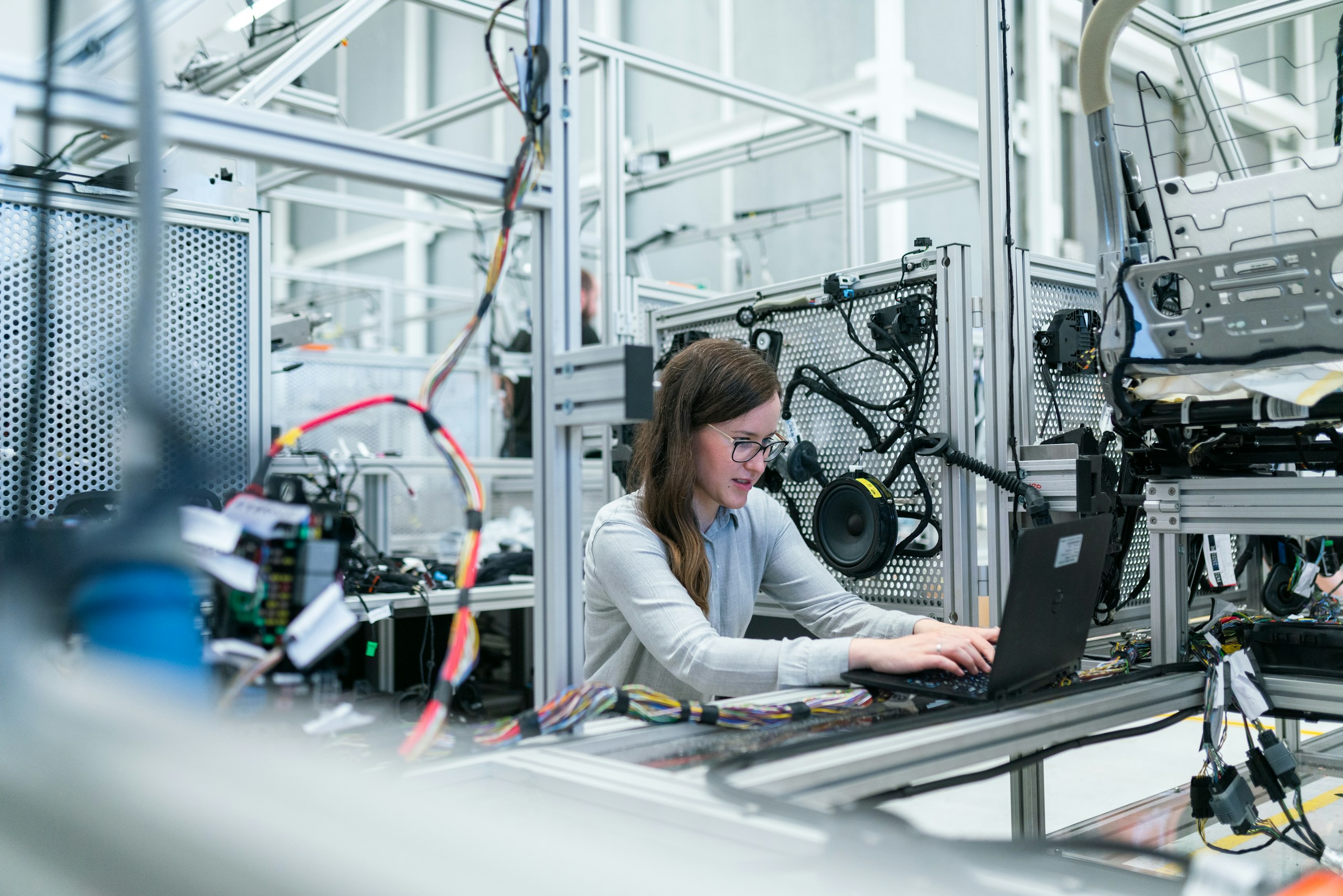
Manufacturing is no longer seeking traditional engineers on one side and technology specialists on the other. Increasingly, organisations need talent that can operate across both domains.
The fastest-growing skills in advanced manufacturing reflect this shift: industrial automation, robotics, AI, Industrial IoT, predictive maintenance, cybersecurity, real-time analytics, digital manufacturing, Python programming, and hardware integration.
In practical terms, manufacturers are looking for people who understand both production processes and digital systems. Engineers are expected to interpret data as confidently as they troubleshoot equipment. IT specialists must understand industrial environments, operational resilience, and plant-floor technologies.
The competitive advantage is moving away from specialist expertise toward interdisciplinary capability.
The Skills Gap is Becoming a Growth Constraint
The challenge for manufacturers is not a shortage of technology. It is a shortage of people capable of deploying, integrating, and optimising it.
As smart manufacturing adoption accelerates, organisations are competing for a relatively small pool of talent with expertise across automation, controls engineering, industrial networking, cybersecurity, AI, and data analytics. At the same time, an ageing workforce continues to remove decades of operational knowledge from the industry.
This combination of rapid technological change and demographic pressure is creating a widening capability gap and in many cases, the ability to scale smart manufacturing initiatives is now constrained more by workforce readiness than by capital investment.
AI is Transforming Roles, Not Eliminating Them
Much of the public discussion around AI focuses on job displacement. The reality inside advanced manufacturing is more nuanced, because AI is primarily augmenting skilled roles rather than replacing them.
Quality professionals are increasingly overseeing AI-powered inspection systems. Maintenance teams are leveraging predictive analytics to anticipate failures before they occur. CNC machinists are evolving into broader engineering technicians with responsibilities spanning automation, additive manufacturing, AI-enabled production, and advanced process optimisation.
The nature of work is changing, but demand for technical expertise remains strong. What is disappearing are highly repetitive tasks. What is emerging are higher-value roles that combine operational knowledge with digital fluency.
The Frontline Workforce is Becoming Digital
The impact extends far beyond engineering teams. As smart factories become more connected, frontline workers increasingly require digital literacy, data interpretation capabilities, and the ability to interact with automated and AI-enabled systems.
Tomorrow’s manufacturing technician will not simply operate machinery. They will interact with digital twins, analyse machine data, respond to predictive alerts, and collaborate with autonomous systems.
This represents one of the most significant workforce transitions the sector has experienced in decades.
Reskilling is Now a Business Strategy
The most forward-thinking manufacturers recognise that they cannot recruit their way out of this challenge. The market for hybrid IT-OT talent is simply too constrained.
As a result, leading organisations are investing heavily in apprenticeships, technical partnerships, upskilling programmes, and workforce development initiatives focused on automation, digital manufacturing, AI, and Industry 4.0 capabilities.
As we see with the data center boom and the associated talent challenges this represents, the conversation in advanced manufacturing is moving beyond talent acquisition toward talent creation.
The New Manufacturing Advantage
Advanced manufacturing has entered a new era. For decades, competitive advantage was built through scale, quality, productivity, and operational excellence. Those factors still matter, but increasingly they are enabled by something else: workforce capability.
IT-OT convergence is creating smarter factories, more intelligent operations, and new opportunities for productivity and innovation. Yet technology alone will not determine who succeeds. The manufacturers that lead the next decade will be those that build workforces capable of bridging the physical and digital worlds, because in the factories of the future, the most valuable employees will not be the best technologists or the best engineers.
The most valuable employees will be the people who can seamlessly combine both technology and engineering skills.