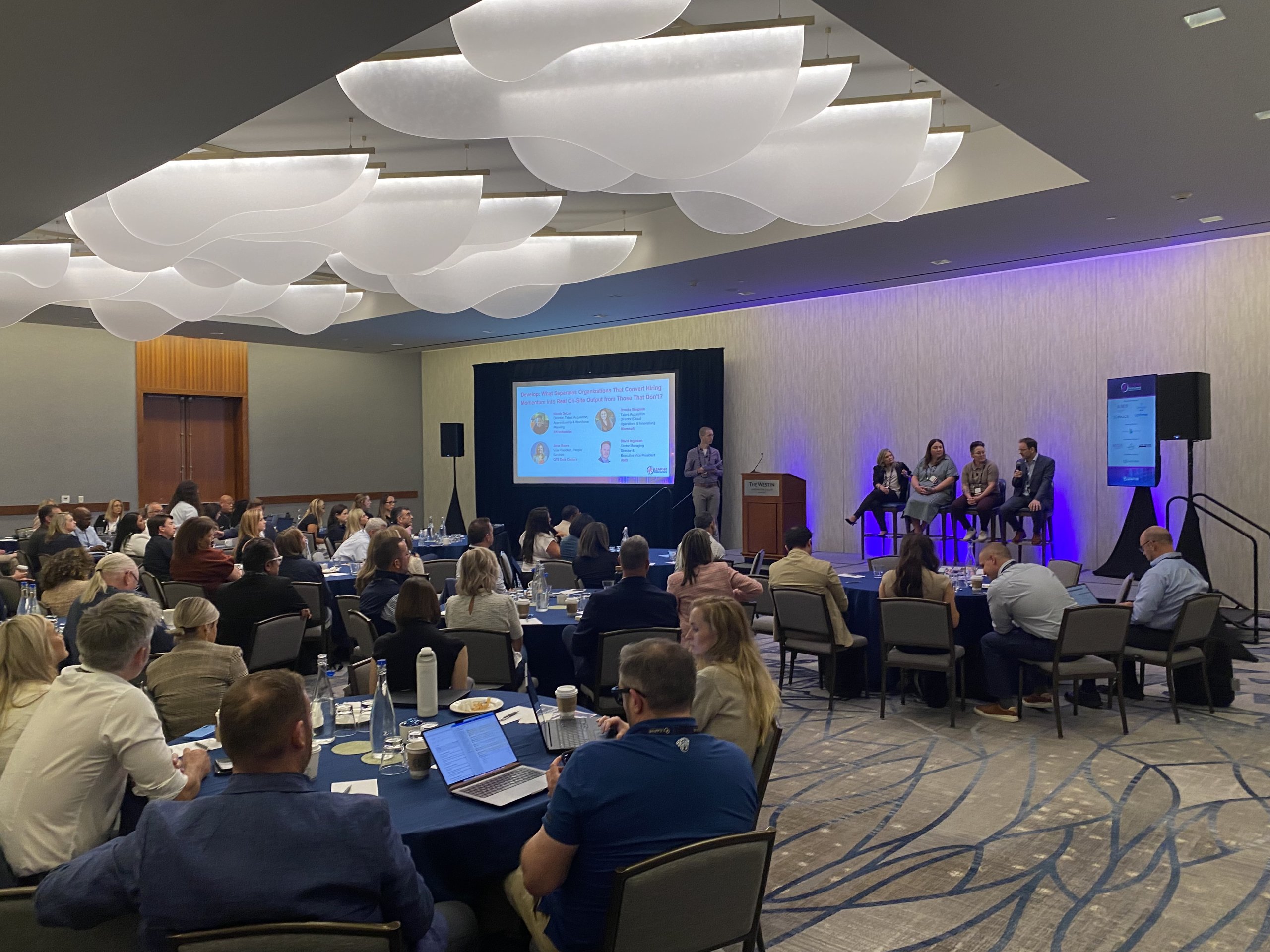
Earlier this month, I had the privilege of attending and speaking at the LEAP HR: Data Centers conference in Washington DC, alongside our client Microsoft, and other HR, Talent Acquisition and workforce leaders from across the data center ecosystem.
The conversations were fascinating, but one theme came through louder than any other:
The future of data center talent isn’t about who can poach the most people. It’s about who can create scalable workforce systems that create, develop and retain talent.
For years, many organizations have relied on hiring experienced talent from competitors to fuel growth. But in a sector experiencing unprecedented expansion, that approach is becoming increasingly difficult, costly and unsustainable.
The organizations making the most progress adopt a different mindset:
- Promoting more talent from within
- Progressing people faster through clear career pathways
- Pioneering new routes into the industry through apprenticeships, community partnerships, military transition programs and skills-based hiring
The challenges being faced are across the entire data center ecosystem and with the likes of the hyperscalers (Google, AWS, Oracle and Microsoft), operators (Equinix, QTS Data Centers, Vantage Data Centers), contractors (JE Dunn, RK Industries, Clayco, PCL Construction, Gilbane Building Company, Fortis Construction and Performance Contracting) and infrastructure and training providers (JLL, Uptime Institute, Interplay Learning, Cengage, and NCCER) all represented, this really was an event that brought to life the salient points at hand:
- Create talent rather than compete for it: Build skills locally through community partnerships, education, military pathways and workforce-readiness programs.
- Start before demand materializes: Sustainable pipelines begin long before a requisition opens, increasing supply while reducing time-to-hire.
- Develop capability systematically: Training, certifications, career pathways and leadership development turn hires into productive, resilient workforce capacity.
- Treat people risk as operational risk: Skills gaps, weak decision-making and concentrated knowledge can ultimately threaten data center performance and continuity.
- Plan around business demand – not vacancies: The priority should be delivering the right skills at the right time, with predictability and productivity as the key measures.
- Industrialize talent acquisition: Successful recruiting functions are specialized, data-driven, closely aligned with hiring managers and designed to scale.
- Protect culture during hypergrowth: Employee listening, internal mobility and visible career opportunities help organizations retain talent while expanding rapidly.
What struck me most was the shift from “talent acquisition” to “talent creation” and in a market where demand continues to outpace supply, workforce strategy is becoming as important as capital strategy. The companies that win won’t necessarily be those with the biggest recruitment teams. They’ll be the ones that build the strongest talent ecosystems.
Less poaching. More promoting, progressing and pioneering.
That feels like the future of data center hiring.