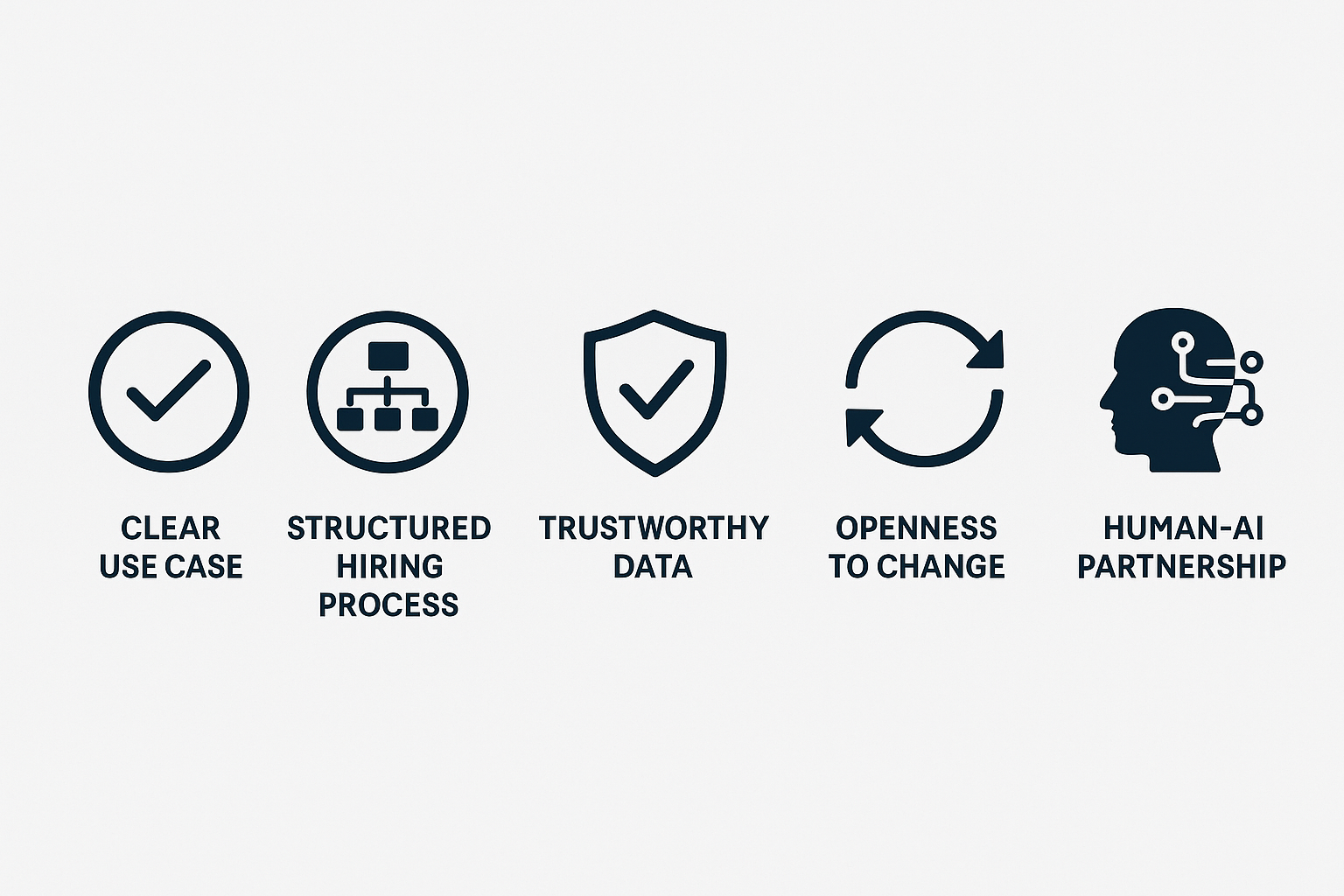
The conversation around AI in recruitment has matured. It is no longer about whether talent acquisition teams should use AI. The real question is whether the organization has the structural discipline, behavioral readiness, and data stability for AI to actually improve hiring.
AI doesn’t succeed because it is sophisticated. It succeeds because the environment around it is prepared. When readiness is present, AI enhances decision quality, increases consistency, reduces manual effort, and strengthens human judgment. When readiness is absent, AI amplifies chaos.
Readiness is not about perfection. It is about direction, predictability, and alignment. Below are the five signs your talent acquisition function is genuinely prepared to benefit from AI in recruitment.
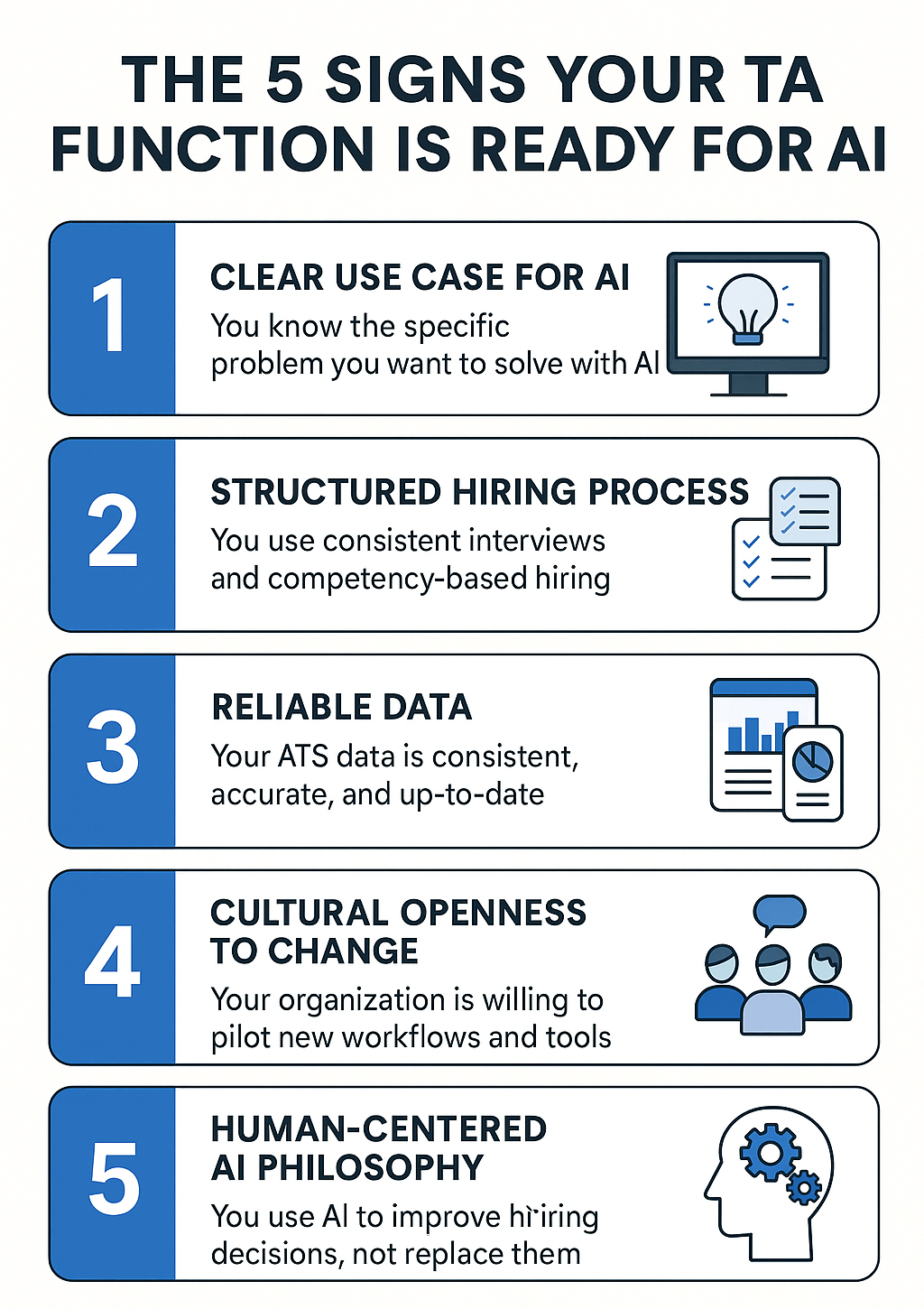

A third sign of readiness is data that reflects reality. AI does not need perfect ATS data; it needs trustworthy and consistent data.
Imagine an ATS where one recruiter updates stages rigorously while another rarely moves candidates unless asked. The inconsistency creates misleading signals that weaken AI recommendations.
Now imagine a system where:
- Stage movement reflects actual progress
- Feedback includes meaningful content
- Time-to-fill metrics follow a consistent pattern
- Tagging is standardized
- Interview notes provide real insight
This is not perfect data, but it is honest data. And honest data enables AI recruitment tools, predictive hiring tools, and talent intelligence systems to reveal patterns that human teams would otherwise miss.
AI is only as good as the behavioral truth reflected in your systems.

AI adoption is not solely a technical shift. It is a cultural one. Teams ready for AI display openness, curiosity, and willingness to pilot new workflows.
Imagine a recruiter who spends hours coordinating interviews. When given an automated scheduler, they feel an immediate reduction in administrative load. That moment of relief is a cultural signal.
Or imagine hiring managers who acknowledge that interview consistency varies more than it should. Their willingness to use structured guides or interviewer coaching tools indicates readiness for interview intelligence solutions.
Organizations that succeed with AI recruitment tools do not resist new methods. They test, adapt, and iterate. Their desire for better outcomes outweighs their attachment to old habits.
If your team’s mindset leans toward experimentation rather than skepticism, the cultural groundwork for AI is already in place.

The final signal of readiness is philosophical alignment. AI cannot replace human judgment in hiring, nor should it. But it can dramatically improve the quality and stability of that judgment.
Imagine an interviewer preparing for a conversation. Instead of entering with uncertainty, they review a brief that highlights the competencies most predictive of success for the role. They still conduct the interview. AI simply sharpens their focus.
Or imagine a hiring manager reviewing candidate feedback that is structured, comparable, and rooted in behavioral criteria. Decision discussions become more grounded, less subjective, and easier to calibrate.
This is what AI does well:
- Identifies patterns humans overlook
- Reduces inconsistent scoring
- Strengthens interviewer confidence
- Flags bias early
- Increases decision clarity
- Supports evidence-based hiring
Organizations that embrace this partnership mindset gain the most value from AI in recruitment.

Here’s a quick comparison to make it easier:
| Readiness Indicator | What It Looks Like | Why It Matters |
|---|---|---|
| Clear use case | A specific hiring problem identified | Ensures targeted AI adoption |
| Structured interviews | Consistent behavioral evaluation | Enables reliable AI insight |
| Trustworthy data | Stable patterns in ATS behavior | Supports predictive analytics |
| Cultural openness | Willingness to pilot new tools | Improves adoption success |
| Human-led decisions | AI enhances, not replaces | Protects fairness and quality |
Once these readiness indicators are visible, teams often explore scalable hiring solutions that blend AI tools with high-quality human expertise.