
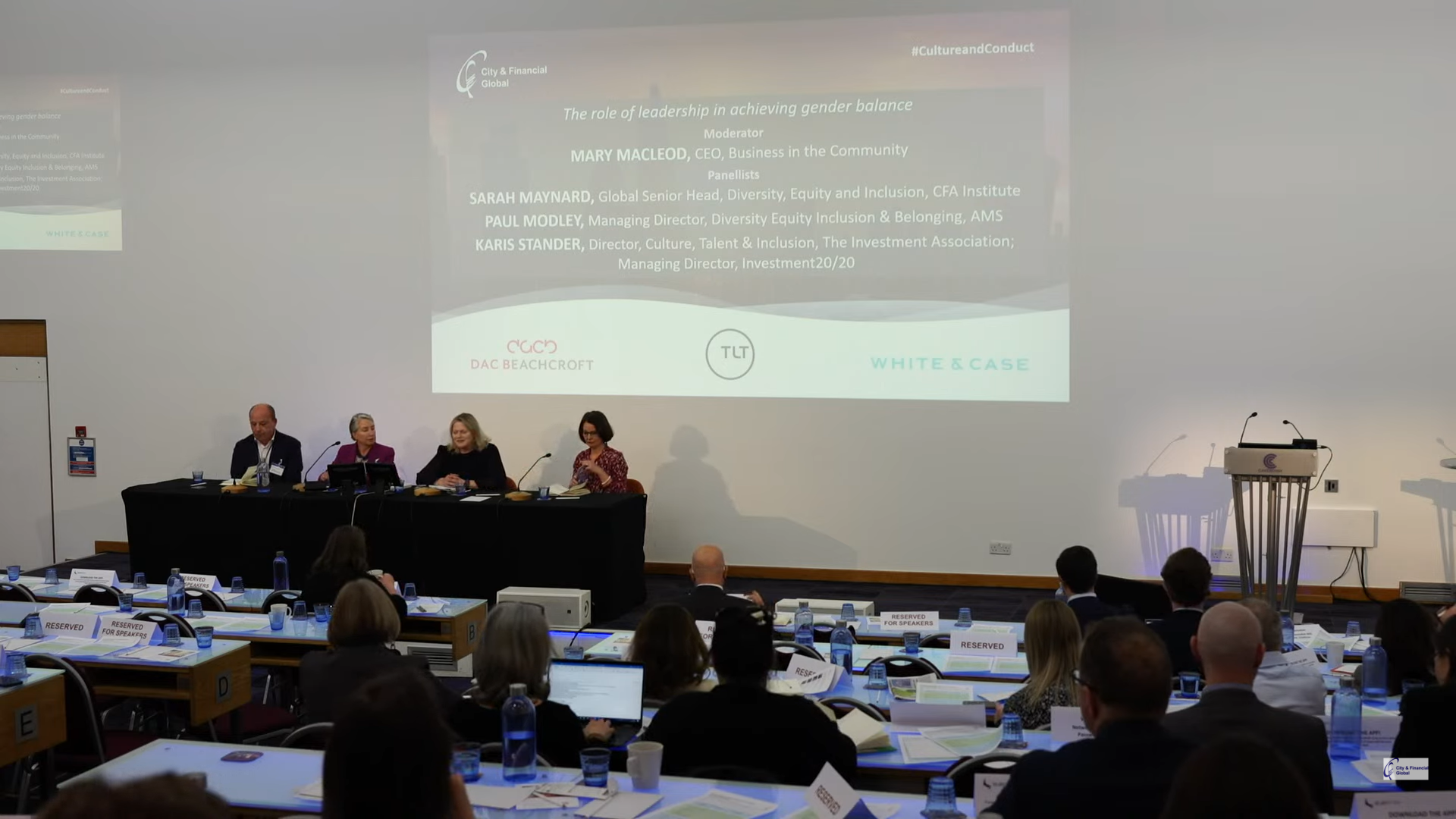
Last week, I had the pleasure of speaking on a panel at the 10th Annual Culture and Conduct in Financial Services Summit. Our discussion centered on a critical question: What role does leadership play in achieving gender balance?
It Starts at the Top
Gender balance isn’t something that happens organically—it requires leadership commitment at the highest levels. Without sponsorship and active support from the Board and Executive Committee, meaningful progress will remain out of reach. Leaders must set the tone, drive accountability, and ensure that gender equity is embedded into the organisation’s culture and decision-making processes.
Industry-Wide Commitment Matters
Achieving gender balance isn’t just a company-level issue; it requires collective action across industries. A great example is the FTSE Women Leaders Review, a UK-based, voluntary, and business-led initiative supported by the government. Its goal is to increase female representation on FTSE 350 Boards and leadership teams. Progress has been made, particularly within the FTSE 100, where women now hold 35.2% of roles at the Combined Executive Committee & Direct Report level—up from 34.3% the previous year. While this is encouraging, it still falls short of true gender parity.
Fixing the System, Not Just the Individuals
One of the most critical leadership responsibilities is fixing the system rather than placing the burden on individuals to navigate flawed structures. Organisations must use data to identify and address biases within their core HR processes—hiring, performance evaluations, promotions, and retention. Where gender imbalances exist, leaders must take concrete action to eliminate bias and create equitable opportunities.
Additionally, investment in sponsorship and mentoring programmes for women is essential. These initiatives help level the playing field by ensuring women receive the guidance, advocacy, and opportunities they need to progress into senior roles.
The Gender Lens on an Ageing Workforce
Another factor leaders must consider is the impact of an ageing workforce through a gendered lens. We now have five generations in the workforce, yet the 50+ age group is the only one that is growing. Businesses are starting to recognise ageing as a critical workforce issue, but it’s equally important to focus on the unique challenges faced by older women who want to remain in the workforce longer. Tailoring policies and support for this demographic is key to maintaining gender balance at all career stages.
The DEI Backlash: What’s Next for Gender Balance?
The growing backlash against DEI in the US has led several major global companies to roll back their commitments. What does this mean for gender balance? The FTSE 100 experience shows that without clear goals and accountability measures, progress is unlikely. If large US headquartered organisations continue to deprioritise DEI, we may see setbacks in gender equity efforts
Final Thoughts
Leadership isn’t just about setting aspirations—it’s about taking deliberate action to create lasting change. From driving systemic fixes to fostering an inclusive culture and resisting the pullback on DEI, leaders have a pivotal role to play in achieving gender balance.