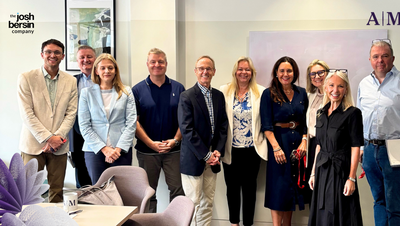
We recently welcomed global HR thought leader Josh Bersin to our London office for a closed-door roundtable exploring one of the most urgent and complex challenges facing organizations today: how to align leadership around AI, skills, and strategy to drive total talent transformation.
The session brought together senior leaders from across industries to unpack the evolving role of AI in reshaping workforce dynamics, talent development, and organizational design. What emerged was a candid, multi-layered conversation that revealed both the promise and the pressure of AI adoption.
Expectations and challenges
Participants acknowledged the high expectations placed on AI to deliver rapid productivity gains and cost efficiencies. Yet, the reality is more nuanced. While major vendors like ADP, Oracle, Workday, and SAP provide end-to-end solutions, many tools remain unproven or not yet enterprise ready.
The market is flooded with fragmented platforms, creating a landscape rich in potential but fraught with uncertainty.
This complexity is compounded by a rapidly evolving vendor ecosystem. ChatGPT’s emerging capabilities in skill assessment are now rivalling specialized platforms. When backed by scientific rigor and strong vendor partnerships, pre-hire AI assessments are delivering impressive accuracy.
Strategic acquisitions, such as SAP’s purchase of Smart Recruiters or Workday acquisition of FlowiseAI, highlight a race among big-tech players to enhance core HR offerings and accelerate innovation.
Amid rising cost pressures, some organizations are slowing hiring or rethinking their talent strategies, seeking smarter, leaner ways to build capability through automation and reskilling.
From experimentation to integration
Josh Bersin outlined a phased roadmap for internal automation, offering leaders a practical guide to navigate AI implementation:
- Experimentation – Small-scale trials to test viability
- Pilot Expansion – Broader use cases and refined data flows
- Architecture Integration – Embedding AI into legacy systems
- Organization-wide Rollout – Scaling successful automations for ROI
This staged approach helps organizations move from isolated experiments to enterprise-wide transformation, supported by agile teams and cross-functional leadership.
One organization shared its success with a three-person HR re-engineering team, tasked with identifying AI use cases. Others emphasized the need for a business-tech lead to bridge IT and HR priorities, ensuring alignment and scalability.
Skills Strategy: From Taxonomy to Action
The session closed with a deep dive into skills strategy. Leaders emphasized the need to reframe “skills” in language that resonates with their organization’s culture and roles. While developing a clear taxonomy is useful, it must not become a distraction from action.
The priority is aligning skills with strategic talent pools and future workforce needs, supported by AI-enabled learning and development models that foster agility and personalization.
Final Reflections
Josh Bersin’s insights underscored a clear imperative: AI is not just a tool, it’s a catalyst for rethinking how organizations operate, develop talent, and lead change. Success will depend on a balanced approach that combines innovation with governance, experimentation with ethics, and technology with human-centred strategy.
As one attendee put it, “AI won’t replace jobs, but leaders who embrace it will replace those who don’t.”
Explore the latest insights from The Talent Climate Series in collaboration with the Josh Bersin Company, designed to help you stay ahead of the talent forecast. Discover more here.