
Diversity, equity, and inclusion, better known as DEI, has moved from the sidelines to the board’s agenda. Yet one question still sparks debate in meeting rooms and comment sections alike: Who benefits from DEI? Ask around and you’ll hear, “It’s mainly for minority groups, right?”
That answer isn’t wrong, but it is incomplete. When DEI is done well, the gains ripple far beyond any single demographic. In fact, the most robust data show that DEI fuels stronger cultures, smarter decision-making, and healthier bottom lines for everyone.
At AMS, we’ve watched inclusive talent strategies transform not just careers but entire P&Ls. Below, we unpack why DEI delivers enterprise‑wide value, where disparities still exist, and how to embed equity so every employee and the business itself win.
What DEI Really Means
One stubborn myth frames DEI as a give‑and‑take equation: if one group gains, another must lose. However, the reality looks different. DEI isn’t about handouts; it’s about removing roadblocks so talent can perform at full capacity. When you widen the doorway, more people and ideas walk through.
A McKinsey study of 1,000 companies found that organizations in the top quartile for ethnic and cultural diversity on executive teams were 36 % more likely to outperform on profitability. Those financial uplifts accrue to shareholders, suppliers, and customers, and not just under‑represented employees.
“If your DEI strategy only works for a select few, it isn’t working.”
Who Benefits from DEI and Why It Drives Business Success
-
Under‑represented Employees
Let’s start with the obvious. Women, people of color, LGBTQ+ employees, neurodiverse individuals, and those with disabilities have historically been excluded from leadership opportunities and decision-making rooms. DEI just levels up the fields.
Take Black women, for instance. Despite being disproportionately represented in higher education, according to the 2024 McKinsey “Women in the Workplace” report, women of color occupy just 7% of C-suite positions, with Black women specifically holding approximately 4–5% of those roles. They’re ready and qualified. What’s missing is equal access to visibility, mentorship, and sponsorship, the kind their white counterparts often receive by default. Women, people of color, LGBTQ+ professionals, neurodiverse talent, and employees with disabilities have long been shut out of leadership pipelines.
DEI levels the field, offering structured access to mentors, stretching roles, and sponsorship. They’re qualified and ready; what’s missing is visibility. Intentional DEI programming fixes that gap.
-
Majority Employees
White men often ask, “Where do I fit into DEI?”
Answer: right at the center.
Inclusive cultures benefit everyone through clear, fair systems and supportive environments. Fair performance systems, transparent promotion criteria, and flexible policies help all employees manage their careers and lives more effectively. These hallmarks of inclusion benefit everyone:
- Leadership development built on inclusive behaviors lifts team performance.
- Remote-friendly guidelines support parents, caregivers, and employees facing burnout.
- Psychological safety encourages open conversations about mental health across the workforce.
-
Leadership Teams
This isn’t just a feel-good initiative. It’s a financial strategy. Companies with diverse leadership teams consistently outperform their peers. That’s not a theory; it’s proven.
Why? Because diverse teams:
-
Avoid groupthink
-
Bring broader market insights
-
Make better, faster decisions based on varied perspectives
When leadership rooms include different voices, blind spots shrink, and profitability grows.
-
The Talent Pipeline
If you’re trying to attract next-gen talent, performative DEI won’t cut it. Gen Z and younger millennials are scrutinizing your culture, beyond the glossy pledges and stock photos.
They’re checking:
-
How diverse your leadership really is
-
What employees are saying on Glassdoor
-
Whether advancement is equitable or performative
Companies with inclusive, transparent cultures attract more applicants, retain top performers, and reduce costly turnover. DEI makes them want to stay rather than just persuading them to join.
-
The Business Itself
Let’s connect the dots. DEI initiatives do more in their capacity, like they help organizations thrive:
-
Companies with inclusive cultures see up to 19% more revenue from innovation.
-
Engaged, valued employees are more productive, loyal, and collaborative.
-
Inclusive workplaces reflect shifting demographics and expand market reach.
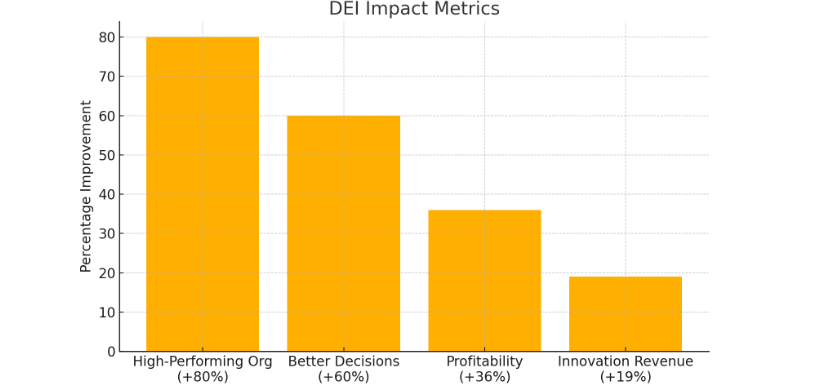
Alt Text: Bar chart showing DEI benefits by group
Ultimately, DEI is an investment in people, performance, and long-term sustainability.
Explaining the Disparities in DEI
While DEI initiatives have opened doors for many, the progress hasn’t been equal. Data reveals a hard truth: white women have seen the most significant gains, especially in leadership roles. The numbers have already been stated earlier.
This points to a critical gap. Gender diversity may be improving, but racial and economic equity lags.
Lanaya Irvin, CEO of Coqual, put it bluntly:
“It’s very easy for companies to say, ‘We’ve delivered on gender,’ but without intersectional data, we miss the deeper inequalities faced by Black, Latina, and Asian women.”
It’s time we asked not just who does DEI benefit, but also who gets left out when equity isn’t intersectional?
Who Benefits From DEI – The Data Case for Action
| Metric | Study | Impact |
| Inclusive employees are 80 % more likely to rate their firm as high‑performing | Deloitte | Retention & productivity surge |
| Teams that feel included make 60 % better decisions | Cloverpop | Faster strategic wins |
| Diverse exec teams post +36 % profitability | McKinsey | Shareholder value |
| Diverse management drives +19 % innovation revenue | BCG | Product pipeline growth |
Breaking the Myth of “Reverse Discrimination”
A misconception, particularly in the U.S., is that DEI is a form of reverse discrimination. In reality, DEI dismantles systemic barriers so everyone can compete on equal footing. White employees, men, and others who don’t fall into a minority group still gain:
- Inclusive leadership training that sharpens emotional intelligence and management skills.
- Flexible work policies that support caregivers, working parents, and remote employees regardless of identity.
- Mental health resources that stem from open, stigma-free dialogue are encouraged in inclusive workplaces.
At AMS, when a major global tech client partnered with us to overhaul its hiring practices with a DEI lens, the result wasn’t just a more diverse candidate slate. Employee engagement scores across all demographics improved because the hiring process felt fairer and more transparent.
Aligning DEI with Broader Equity Goals
A DEI program that only benefits some isn’t truly equitable. To drive systemic impact, companies must align DEI with broader racial and economic equity strategies. That means:
-
Auditing who actually benefits from current programs
-
Using data to uncover hidden disparities
-
Ensuring policies reflect equity, not just equality
White women have gained more visibility, but people of color, especially women, continue to face barriers. True DEI requires a holistic approach that integrates race, gender, disability, neurodiversity, and economic background.
Future Directions for DEI Strategies
Looking ahead, the most effective DEI strategies will evolve from siloed programs to embedded business infrastructure. Here’s what that looks like:
-
Intentional mentorship and sponsorship: To elevate underrepresented voices and support leadership development.
-
Transparent diversity data: Public-facing progress reports foster accountability and trust.
-
Support for minority-owned businesses: A strong DEI strategy considers supplier diversity and economic inclusion.
-
Systemic policy reviews: From equitable pay to bias-free hiring, policies must dismantle, not reinforce barriers.
In short, DEI needs to live in the company’s DNA rather than just sticking to an HR manual.
So… Who Really Benefits from DEI?
Finally, concluding this blog, the answer remains the same again – Everyone. But only when it’s done right.
-
C-suite executives gain from sharper strategy and stronger returns.
-
Mid-level managers gain from better team dynamics and inclusive leadership development.
-
Entry-level employees gain from career mobility, fair evaluations, and mentorship.
-
Underrepresented groups gain visibility, access, and equity.
-
Majority employees gain psychological safety, flexibility, and a purpose-driven culture.
-
Customers gain from innovation shaped by broader perspectives and deeper empathy.
When DEI is embedded into the way we lead, hire, promote, and collaborate, it creates a workplace where talent thrives, cultures flourish, and business outcomes improve.
Final Thought
Next time someone asks, “Who does DEI benefit?”, flip the script:
The employee finally heard in meetings. The manager who learns to lead more humanely. The leadership team that stops losing talent. The customer enjoys products shaped by wider insight. The shareholder is seeing sustained returns.
Inclusion isn’t a favor. It’s how high‑performing companies are built.
So, what could your culture look like if everyone had the chance to thrive?
At AMS, we support organizations in doing just that. Our Diversity and Inclusion Advocacy program leverages practical, scalable solutions and responsible AI to build truly inclusive workplaces that align with long-term equity goals. Get in touch with us today for more insights.