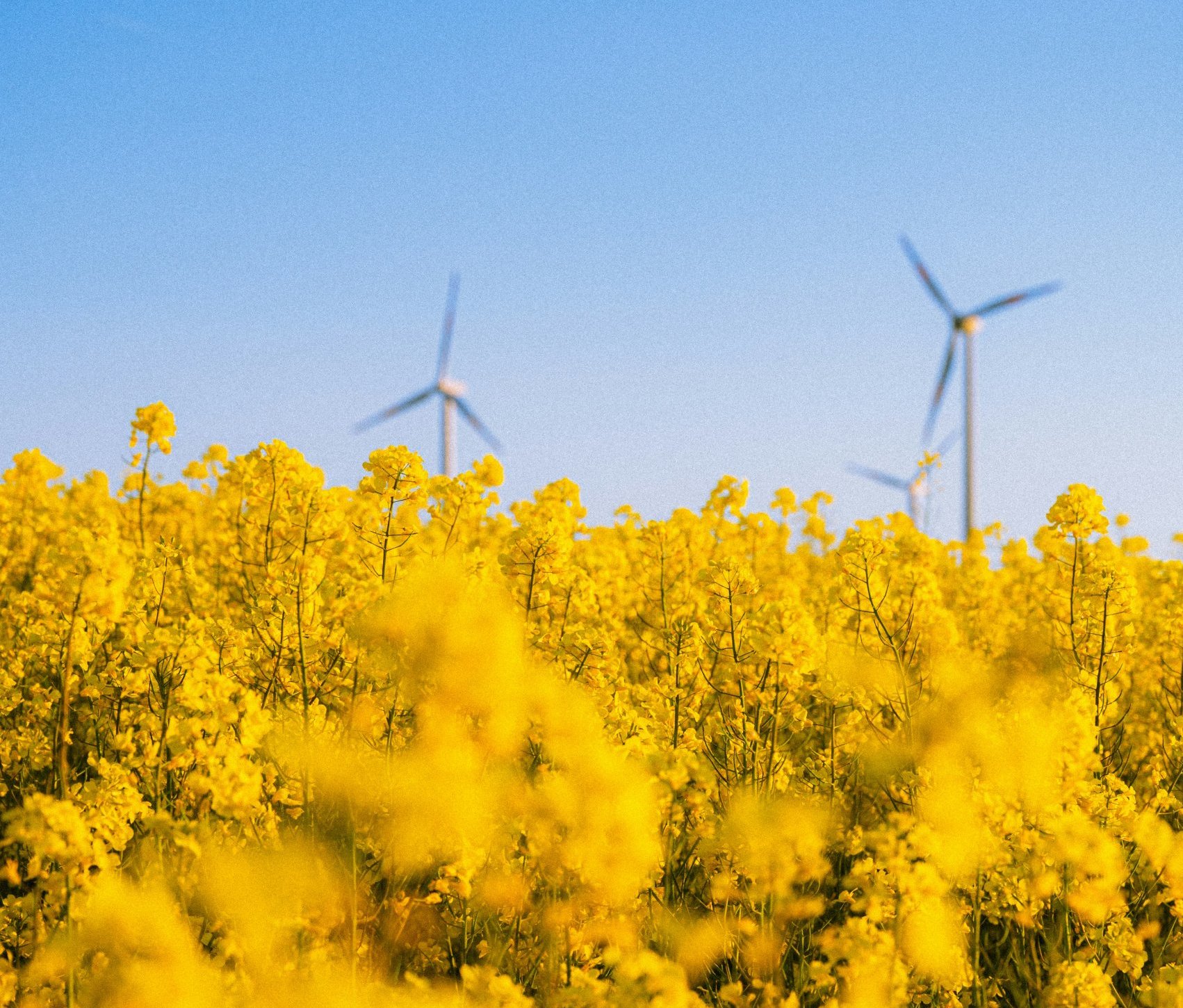
Forgive me in advance for my ‘spring-related metaphors’ (I’m based in the UK), but as I was developing this article I was surprised with how many seemed to work quite nicely! Spring is also my favorite month, which may have something to do with it….
Spring is the season when nature renews itself, but it is also the season when leaders in the global energy sector must lay down the foundations for future growth, and the gap between fast‑moving organizations and hesitant ones widens.
In the energy sector, 2026 is poised to be a turning point. Renewables are scaling faster than ever, grids are being pushed to their limits, oil & gas majors are repositioning for a multi‑decade transition, and workforce shortages risk slowing progress just as global demand surges – particularly with the hypergrowth in data centers and AI.
Spring, with its symbolism of sowing, pruning, grafting, and pollination, provides a nice framework for what organizations must do now to grow in the seasons ahead.
1. The soil is fertile: Demand is surging everywhere
Renewables are expanding at record pace. The International Energy Agency (IEA) reports that clean energy job growth now exceeds fossil fuel workforce growth and that renewables could reach 30 million jobs by 2030, led by solar PV and onshore/offshore wind. Even despite the geopolitical environment, the World Economic Forum identifies the “clean industrial revolution” as a defining megatrend for 2026, accelerated by investment in storage, grid modernization, and domestic manufacturing competitiveness.
AI is reshaping energy demand. S&P Global forecasts that data centers, AI operations, and electrification will be the major drivers of electricity demand growth through 2030, placing new pressure on grids and accelerating investment cycles.
Hydrogen, storage, and transmission are maturing – but unevenly. McKinsey notes that many hydrogen and CCUS projects have hit pauses or redesign phases, not due to lack of capital but due to supply chain bottlenecks, permitting delays, and workforce constraints.
Overall, the soil for growth is rich – but it is increasingly competitive and increasingly constrained as a result of skills shortages and ageing workforces.
2. Spring requires planting: Organizations are investing heavily in skills
Across global markets, leading energy organizations are planting the seeds of new capability:
- Ørsted is training new cohorts of offshore wind technicians and investing in supply‑chain resilience after project overruns.
- bp, following its strategic reset, is doubling down on ensuring optimum oil and gas operations but also bolstering low‑carbon capability through major focus in EV charging, bioenergy and offshore wind.
- Enel is investing heavily in grid digitalization, prioritizing data‑driven engineering skills and resilience.
- Tesla Energy continues to expand its virtual power plant (VPP) and battery storage expertise, creating entirely new hybrid technical roles.
- RWE is growing its renewables workforce across Europe and the US as offshore and solar portfolios scale.
Across all these companies, one trend is consistent:
The winners aren’t hiring the most – they’re hiring the right skills ahead of others.
3. Spring also requires pruning: Removing what no longer serves growth
Growth is not only about adding – it’s also about refining (pardon the pun).
Oil & gas companies are pruning legacy organizational structures. Chevron, Shell, and ExxonMobil have each streamlined organizational layers to become more agile in capital allocation and low‑carbon ventures.
Renewable developers are cutting underperforming assets. Developers in Europe and the US have exited or renegotiated offshore wind projects due to inflation, supply chain cost spikes, or permitting complexity.
Utilities are simplifying their technology stacks. Deloitte highlights that utilities across North America and Europe are removing legacy IT infrastructure to enable AI-enabled grid operations and predictive maintenance.
Just as a tree needs pruning to channel growth energy into the right branches, organizations are cutting back to focus on what will produce the strongest outcomes in 2027 and beyond.
4. Growth requires pollination: Partnerships spread ideas and capabilities
Spring teaches us that growth rarely happens in isolation. In business, the equivalent of pollination is partnerships – between companies, suppliers, governments, universities, and technology innovators, and this is particularly crucial in the energy sector.
Examples include:
- Equinor partnering with UK universities on offshore wind, CCS, and hydrogen research.
- Siemens Energy collaborating with governments worldwide on grid stability, transmission build-out, and hydrogen-ready turbine innovation.
- Enel partnering with technology firms to accelerate digital grid capabilities.
- bp engaging in joint ventures globally to accelerate clean mobility and EV infrastructure.
These partnerships pollinate the ecosystem – spreading technology, talent, and capability.
5. Growth is not guaranteed: Storms & late frosts
Even in spring, many challenges can slow growth. And the energy sector has many:
Workforce shortages remain a huge barrier. According to GETI and IRENA, 75% of renewable employers struggle to fill critical roles, especially:
- wind turbine technicians
- solar installers
- grid integration engineers
- storage and battery specialists
- data and digital operations talent
Permitting delays and supply chain bottlenecks slow things down further. Hydrogen and offshore wind developers face years-long waits, threatening project timelines and threatening the viability of investment business cases.
Geographic mismatch. Plants (in both senses of the word!) don’t prosper if they don’t have the right food. Often, the talent is not located where the projects are – particularly in offshore, remote, or rural build zones.
Grid constraints. Schneider Electric (and others) warns that electricity demand from AI, heat pumps, EVs and storage will exceed near-term grid capacity without rapid upgrades.
All of the above challenges are the frosts that can kill growth if leaders don’t act early enough.
So, what should leaders in the energy sector be doing now, in preparation for growth?
Using the spring metaphor, the companies that win in 2026 will:
Prepare the soil
- Build an accurate, data-driven view of workforce capability
- Modernize legacy systems blocking operational agility
Plant the right seeds early
- Invest in top 6 growth roles: storage, grid, wind, solar, data, digital operations
- Expand early-careers pipelines to build a culture of growing from within
- Create adjacent talent pathways (e.g., electricians → solar technicians)
Prune wisely
- Remove out-of-date processes, legacy governance, and slow decision cycles
- Streamline tech stacks to enable AI-driven operation
Pollinate with partners
- Collaborate across supply chains, universities, and research institutes
- Co-invest in workforce development with public-sector projects
Protect seedlings
- Anticipate skill shortages and plan to mitigate them
- Build retention pathways
- Offer compelling purpose-led employee value propositions
Spring favors the prepared
Spring is the beginning of a cycle – not the end. In the energy sector, everything leaders do in the next few months will shape their growth path for years to come. The organizations that prepare the soil, plant strategically, prune decisively, partner broadly, and protect their people will harvest meaningful results when autumn arrives.
I must make sure I get back in my garden this evening…